How to Choose the Right Child Car Seat for Your Baby?
Choosing the right Child Car Seat is a crucial decision for parents. Safety is paramount, as every parent wants to protect their precious one during travel. A suitable car seat can make all the difference in an emergency.
Parents often feel overwhelmed by the options available. There are various types, including infant seats, convertible seats, and booster seats. Each serves a specific age and weight range. It's important to choose one that fits your child’s current needs. However, many parents overlook the installation process. A poorly installed seat can lead to serious safety risks.
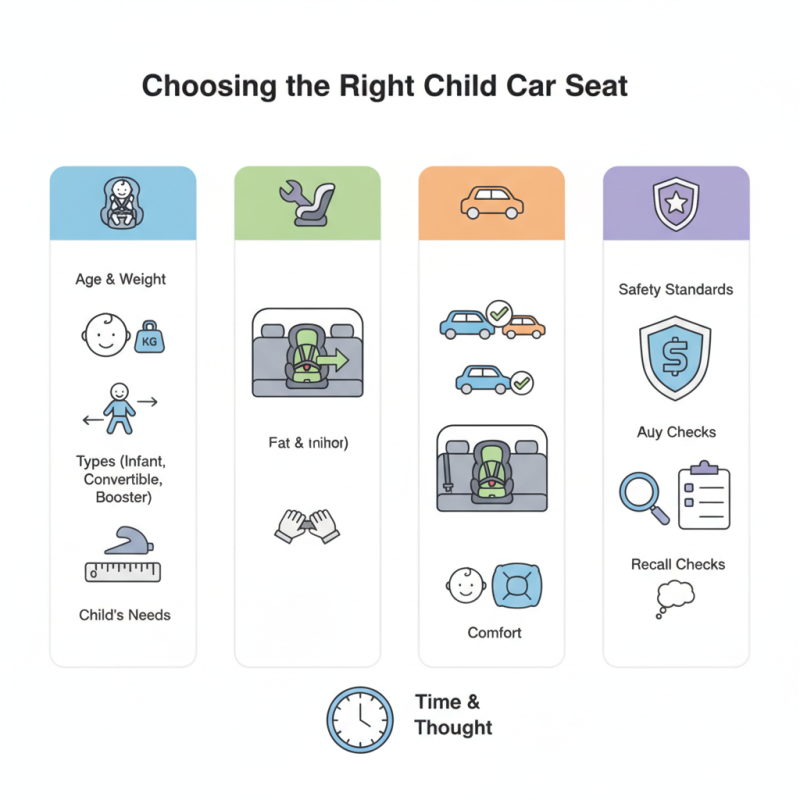
Consider your vehicle type too. Some Child Car Seats fit better in certain cars. Test a few models in your vehicle. Comfort also matters; a seat that is uncomfortable may not be used properly. It’s not just about safety; your child should also be happy while traveling. Balancing these factors can be challenging. Ultimately, ensure the Child Car Seat meets safety standards and recalls are checked regularly. This choice deserves time and thought.
Understanding the Different Types of Child Car Seats Available
Choosing the right child car seat can feel overwhelming. There are several types of seats available, each designed for different ages and stages. Infant seats are typically rear-facing. They provide good support for newborns and young infants. Convertible seats can switch from rear-facing to forward-facing. They adapt as your child grows, which can be practical.
Booster seats come into play when children outgrow forward-facing seats. They help position the seatbelt correctly on a child’s body. It's a common mistake to skip this step, thinking a seatbelt alone is enough. High-back boosters provide additional support and protection, while backless options are more portable.
Many parents might rush this decision. Some may not fully grasp the importance of age-appropriate seats. It’s vital to read and understand what each type offers. Be sure to consider the installation process—some seats can be tricky to set up. It’s better to spend a bit more time researching, ensuring your child is safe and comfortable on every ride.
Evaluating Safety Ratings and Standards for Child Car Seats
When choosing a child car seat, safety should be a top priority. Various safety ratings and standards exist to help parents make informed decisions. The National Highway Traffic Safety Administration (NHTSA) provides comprehensive guidelines. It emphasizes that proper installation can reduce the risk of injury by up to 80%.
Many car seats undergo rigorous testing to meet safety standards like FMVSS 213 in the U.S. This standard evaluates how well a seat can protect a child in a crash. However, not all car seats receive the same ratings. According to a report from the Insurance Institute for Highway Safety (IIHS), only a fraction of seats score the highest ratings. It is crucial for parents to research these ratings before purchasing.
Installation errors are common, affecting safety. Studies reveal that nearly 60% of parents incorrectly install car seats. This makes it essential to seek guidance or professional help. Having access to current data can empower parents. Knowing the importance of safety certifications, combined with this understanding, can help improve the wellbeing of young passengers.
Safety Ratings of Various Child Car Seats
Factors to Consider When Choosing a Car Seat for Your Baby
Choosing the right car seat for your baby involves several important factors. Safety should be your top priority. Look for seats that meet the latest safety standards. Always check for crash test ratings. Additionally, ensure the seat has a sturdy base and secure harness system.
Tips: Research different types of car seats. There are infant seats, convertible seats, and booster seats. Each type has specific features to consider. Think about convenience too. Some seats are easier to install than others. A complicated installation can lead to mistakes.
Consider the age and weight of your baby. These factors influence the choice of seat. A seat that seems perfect now may not be ideal a few months later. It's important to reassess as your child grows. Don't forget about the size of your vehicle. Some car seats may not fit well in smaller cars. This can create challenges. Adjust your choices based on your unique situation.
Tips for Properly Installing and Using a Child Car Seat
Installing and using a child car seat properly is crucial for safety. According to the Centers for Disease Control and Prevention, car crashes are a leading cause of injury for children. Shockingly, about 46% of car seats are not installed correctly, putting children at risk. Families need to pay attention to installation guidelines. Properly securing the seat can reduce the risk of injury in an accident by 71%.
When installing a car seat, ensure it fits tightly against the vehicle’s seat. Use either the LATCH system or the seat belt, but not both together. Relying on both can create confusion and lead to improper installation. After installation, test the seat's stability. If it moves more than an inch side to side or front to back, it needs tighter securing.
Regularly check the seat’s harness. The straps should be snug against the child’s body and lie flat. Many parents forget to adjust the straps as their child grows. This oversight can result in inadequate protection. It’s essential to ensure the seat is suitable for the child's height and weight. Periodically review all components of the seat for wear and tear. Proper installation and usage can greatly enhance safety during travels.
How to Choose the Right Child Car Seat for Your Baby?
| Car Seat Type | Recommended Age/Weight | Safety Features | Installation Method |
| Infant Car Seat | Birth to 22-35 lbs | Rear-facing, side-impact protection | Base installation or seat belt |
| Convertible Car Seat | Birth to 65 lbs | Multi-position recline, energy-absorbing foam | Rear-facing and forward-facing |
| Booster Car Seat | 40 to 100 lbs | High back, adjustable headrest | Seat belt positioning |
| All-in-One Car Seat | Birth to 120 lbs | Extended rear-facing, built-in LATCH system | Multi-functional |
Transitioning Between Different Car Seat Stages as Your Child Grows
Transitioning between different car seat stages is crucial as your child grows. It’s essential to ensure that each stage meets safety standards suitable for your baby’s age and size. Infants should use rear-facing seats until they reach the weight and height limits recommended by the manufacturer. This position provides the best support and protection for their fragile necks and spines.
As your baby transitions to a forward-facing seat, it's important to consider their comfort. Ensure the harness is snug but not too tight. A common mistake is not adjusting the straps as your child grows. The harness should lie flat against the chest and not be twisted. Check often, especially after car seat use.
When moving to a booster seat, remember that your child must be mature enough to sit properly for the entire ride. You cannot skip this stage. One tip is to keep the booster seat in one spot. This habit helps reinforce proper usage and allows for routine. A good fit between the car's seatbelt and the child is necessary. Monitor this stage closely; even small adjustments can make a significant difference in safety.