Choosing the right pressure cooker replacement is rarely as simple as matching size and appearance. A cooker may fit the countertop but fail at the lid, gasket, or pressure-release valve. Global buyers must examine capacity, cooking material, spare-part availability, voltage, and regional certification requirements. A 5-liter model for one market may not suit another household or supply chain.
Laura Pazzaglia, a respected pressure-cooking educator and founder of Hip Pressure Cooking, has repeatedly stressed a practical safety principle: “Always follow the manufacturer’s instructions.” That advice remains important when comparing replacement lids, sealing rings, safety valves, and complete appliances. Small components matter. A worn gasket can leak steam around the lid. An incorrect valve can affect pressure control. The details are not glamorous.
Reliable sourcing also requires evidence. Buyers should request technical drawings, food-contact material information, testing records, warranty terms, and clear installation guidance. Experienced suppliers should explain compatibility instead of promising that every part is universal. That promise is often too convenient.
Options may include original manufacturer parts, compatible aftermarket components, refurbished units, or a complete replacement cooker. Each choice has trade-offs in price, service life, documentation, and risk management. Some buyers focus heavily on the lowest quotation. That can be a mistake.
A careful pressure cooker replacement strategy compares the entire ownership cost, including shipping, maintenance, returns, and local support. Product descriptions can be incomplete. Measurements should be checked twice. For global buyers, dependable performance matters more than a perfect-looking match.
Top Pressure Cooker Replacement Options for Global Buyers
Understanding pressure cooker replacement needs starts with accurate measurements. Check the inner pot diameter, height, rim shape, and handle position. A small mismatch can prevent proper sealing. Measure twice. Write everything down.
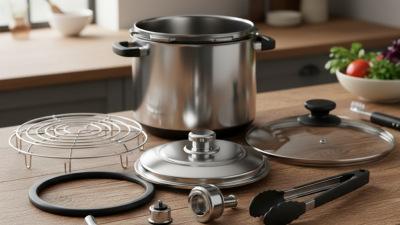
Replacement parts usually include sealing rings, pressure valves, safety plugs, lids, and cooking pots. Each part serves a different function. A worn sealing ring may cause steam leakage around the lid. A damaged valve can affect pressure control. Buyers should compare the original part’s material, thickness, and heat resistance. Food-contact materials should have clear safety documentation and suit the cooker’s temperature range.
Global buyers must also check electrical specifications when replacing complete units. Voltage, frequency, plug type, and local certification requirements may differ. Spare-part availability matters more than a low purchase price. I once assumed a universal gasket would fit several cookers. That assumption was wrong. The rubber looked identical, but the groove depth differed by a few millimeters. Always request technical drawings, product photos, and installation instructions before ordering. Keep the old part for direct comparison. If the cooker shows unusual steam release, stop using it until a qualified technician checks the lid, valve, and sealing system.
Top Pressure Cooker Replacement Options for Global Buyers
A pressure cooker depends on several small parts working together. The sealing gasket is often the first replacement to consider. It should sit evenly inside the lid, without cracks, stretching, or a strong chemical smell. A loose gasket can release steam around the rim. That problem deserves attention.
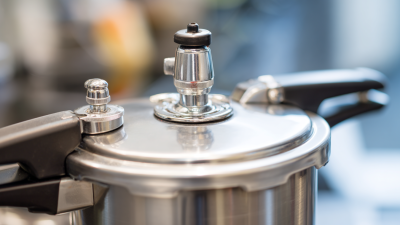
Pressure release valves and pressure indicators are equally important. These parts control or display pressure during cooking. Buyers should match thread size, lid design, and operating pressure before ordering. A part that looks similar may still be unsafe. Check the cooker’s manual and measure the original component carefully. Small details matter.
Other useful replacements include lid handles, pot handles, safety plugs, cooking racks, and detachable power cords. Stainless steel racks can keep vegetables above the cooking liquid. Heat-resistant handles should remain firm after repeated use. Electric models may need a compatible cord and temperature-rated connector. Material quality varies between suppliers, so request specifications and clear product photos. I have seen buyers focus on price and overlook fit. That choice can create more waste later. Compatibility is not optional. Inspect every part before use, and replace anything warped, brittle, or difficult to clean.
Key types of pressure cooker replacement parts and accessories, ranked by typical service-life guidance. Actual replacement timing depends on usage, heat exposure, cleaning methods, and the cooker model.
Typical guidance: inspect sealing and safety components regularly, and always confirm dimensions, material compatibility, and pressure rating before purchasing replacement parts.
Matching a replacement part starts with the cooker’s exact model number. Check the label beneath the handle, on the base, or inside the lid. Capacity alone is not enough. Two six-liter cookers may use different gasket diameters, valve stems, or lid-lock systems. Measure the old component with a ruler, then compare its shape, thickness, and connection points with the supplier’s specifications. A part that looks similar may still create a poor seal.
Pressure ratings also matter. Confirm that the replacement valve, safety plug, and sealing ring suit the cooker’s original working pressure. Materials deserve attention too. Food-contact parts should come with clear material information and care instructions. Ask for dimensional drawings when product photos are unclear. For international orders, request the model range, production version, and compatibility notes in writing. This small step can prevent expensive returns. It is easy to overlook older versions.
Tips: Keep the removed part until the new one arrives. Photograph its position before disassembly. Compare inner and outer gasket diameters, not just the package description. Test the cooker with water only after installation, and stop using it if steam escapes around the lid or valve. A careful recheck is better than a quick assumption.
When buying pressure cooker replacement parts internationally, safety begins with exact compatibility. Match the cooker’s model number, capacity, lid design, and pressure rating. A similar-looking gasket may still leak under heat. Check whether the part is intended for steam pressure, not ordinary cookware. That distinction matters.
Review the material carefully. Food-contact silicone should have clear temperature limits and compliance documents. Stainless steel parts should resist corrosion and show consistent thickness. Inspect the safety valve, pressure regulator, locking pin, and sealing ring separately. Each component must move freely and fit without force. International standards differ, so request test reports, conformity declarations, and traceable production details. “Food-safe” alone is not enough evidence. In practical inspections, small defects often appear around valve threads and molded edges. I might miss something too, especially when relying only on product photographs. Request close images and written measurements before payment.
Tips: Compare the replacement part with your original piece. Measure the inner and outer gasket diameters. Confirm the maximum working pressure. Avoid parts with cracks, strong odors, unclear materials, or missing instructions. Keep invoices and certification files for future checks. Ask how the part was packaged and stored, because heat and sunlight can weaken rubber seals. Never test a replacement under pressure if the lid does not lock smoothly.
| Replacement Option | Typical Material | Compatibility and Measurement Checks | Safety and Quality Checks | Useful International Buyer Evidence | Main Purchase Risk |
|---|---|---|---|---|---|
| Sealing Gasket or Ring | Food-contact silicone or heat-resistant elastomer | Match the cooker model, lid-groove profile, internal diameter, cross-section, and locking design. Measure the original ring after cleaning, but do not rely on diameter alone. | Material should be suitable for repeated contact with hot food and steam. Check for uniform thickness, smooth surfaces, absence of cracks, strong odor, sticky residue, or permanent deformation. | Food-contact declaration or test report referencing applicable requirements such as EU Regulation (EC) No. 1935/2004 or applicable U.S. food-contact rules, where relevant to the destination market. | An incorrect profile can cause steam leakage or prevent pressure from building, even when the measured diameter appears correct. |
| Pressure Regulator or Weight | Stainless steel, plated metal, or high-temperature engineering polymer, depending on the original design | Match the valve stem, seating geometry, vent-hole size, and specified operating pressure. The original pressure specification must be confirmed from the cooker documentation. | The regulator must move freely, release steam consistently, and not be modified or manually weighted. A pressure cooker must never be operated with a blocked vent. | Request a pressure-setting specification, functional test record, and instructions for cleaning and inspection. Do not accept a generic “universal” claim without dimensional and pressure data. | A regulator with the wrong pressure setting may create unsafe overpressure or poor cooking performance. |
| Overpressure Plug or Safety Valve | Food-contact elastomer seal with stainless steel or corrosion-resistant metal components | Match the hole diameter, thread or push-fit design, seal thickness, and manufacturer-specified release pressure. Confirm whether the part is intended for stovetop or electric equipment. | The valve should be free from blockage, corrosion, burrs, and damaged seals. It must provide an independent pressure-relief function and must not be replaced with a solid plug. | Ask for pressure-relief test results, dimensional drawings, corrosion checks, and documentation against the applicable pressure-cooker safety requirements in the destination market. | A visually similar valve may have a different release pressure or sealing geometry. |
| Steam Vent or Vent Pipe | Stainless steel, commonly corrosion-resistant grades such as 304; exact grade must be verified | Check pipe length, outside diameter, thread or mounting method, vent opening, and contact with the regulator. The passage must align with the lid and remain unobstructed. | Inspect for burrs, dents, scale, rust, and internal blockage. The vent should be removable for cleaning when the original design requires it. | Request material identification, dimensional inspection records, and photographs of the internal passage. Stainless steel grade claims should be supported by a material certificate when required. | A restricted vent can interfere with pressure regulation and safety-valve operation. |
| Lid-Locking Handle or Side Handle | Heat-resistant polymer handle with stainless steel fasteners, or stainless steel construction | Match mounting-hole spacing, screw size, handle clearance, lid-locking mechanism, and load-bearing geometry. Confirm that the handle does not obstruct the pressure indicator. | Check resistance to heat, cracking, loosening, and deformation. The lid must not be capable of opening while internal pressure remains above the safe opening condition. | Request assembly drawings, torque requirements, heat-resistance data, and evidence of lid-locking and opening-force tests. | A replacement handle may fit mechanically but fail to preserve the original interlock or locking function. |
| Inner Cooking Pot | Stainless steel, often specified as 304 for food-contact cookware; aluminum may be used in some designs | Match nominal capacity, rim diameter, base diameter, height, rim profile, and minimum or maximum fill markings. For electric units, also match the heating-base and sensor geometry. | The rim must be round and undamaged. The base should sit flat, without dents that could affect heating or sensor contact. Coatings should be intact and free from peeling. | Request capacity verification, dimensional inspection, food-contact documentation, and material or coating declarations for the destination country. | Nominal capacity alone does not guarantee correct fit, sealing, heating, or pressure performance. |
| Pressure Indicator or Pop-Up Pin | Stainless steel or compatible high-temperature polymer with an elastomer sealing ring | Match pin diameter, travel distance, spring or float design, seal dimensions, and lid mounting arrangement. Confirm whether the indicator also acts as a secondary safety lock. | The indicator should move smoothly and return to its safe position after pressure is released. It must not be painted, glued, filed, or otherwise modified. | Request functional test results at zero pressure and operating pressure, plus leakage and temperature-resistance information for the seal. | A sticking indicator can give a false pressure reading or interfere with safe lid opening. |
| Electrical Lid or Control-Safety Component | Heat-resistant polymer housing, stainless steel hardware, and rated electrical contacts | For electric pressure cookers, match the exact voltage, frequency, connector layout, sensor position, thermal cutoff rating, and locking mechanism. | Electrical parts require insulation, grounding, temperature, leakage-current, and abnormal-operation checks appropriate to the destination market. Do not install a component with a different voltage or rating. | Request electrical ratings, wiring diagrams, insulation test results, and compliance documentation for the applicable household-appliance safety standard and destination country. | Incorrect electrical ratings or altered interlocks can create shock, fire, or pressure-release hazards. |
Top Pressure Cooker Replacement Options for Global Buyers
When comparing replacement pressure cookers, supplier reliability matters more than the lowest factory quote. Request material certificates, pressure-test records, gasket specifications, and documented production capacity. Stainless steel thickness should be stated clearly, not described as “premium.” Ask for sample units before placing a bulk order. Small details matter.
Costs extend beyond the product price. Calculate tooling, inspection, export packing, insurance, customs duties, and inland delivery. The World Bank’s Logistics Performance Index 2023 reported an average 44-day journey between entering the origin port and leaving the destination port. Delays can therefore increase warehouse and financing costs. UNCTAD’s Review of Maritime Transport 2024 also highlighted continued volatility in container shipping and routing. A cheaper supplier may become expensive after freight changes. I have seen buyers overlook spare-part storage. That mistake is costly.
After-sales support should be measured in practical terms. Confirm response times, replacement-gasket availability, warranty limits, and procedures for damaged valves or handles. Ask whether technical instructions are available in the destination market’s language. The International Trade Centre recommends clear product classification and documentation for smoother cross-border transactions. However, paperwork alone does not prove service quality. Request two recent customer references and a sample claims report. My own comparisons sometimes focus too heavily on unit cost. That approach needs revision. A reliable option should balance tested safety, predictable shipping, accessible parts, and transparent corrective action.