Why Choose Fagor Pressure Cooker Parts for Global Buyers?

For global buyers, choosing the right fagor pressure cooker parts means more than finding a low price. It means protecting performance, fit, and everyday cooking safety. A replacement sealing ring, pressure valve, or handle may look simple. Small differences can matter.

Experienced buyers check the cooker’s model number, capacity, and production details before ordering. They compare measurements, materials, packaging, and supplier documentation. A seal should sit evenly in its groove. A valve should move correctly without sticking. These details help prevent wasted shipments and unsuitable replacements. Clear product photographs and technical descriptions also support better decisions across international markets.

Reliability matters beyond the first purchase. Reputable suppliers explain compatibility limits and provide consistent quality information. They should not promise that one component fits every Fagor model. That claim sounds convenient, but it can create costly mistakes. Availability may also vary by region, age, and product line. Buyers should confirm stock, delivery terms, and return conditions before payment. Keep records.

There is no perfect shortcut. Even a well-made part can fail if installed incorrectly or matched to the wrong cooker. Careful inspection remains necessary after delivery. Look for cracks, uneven edges, damaged threads, or missing instructions. When uncertainty remains, consult the appliance manual or a qualified repair professional. With evidence-based sourcing and realistic expectations, fagor pressure cooker parts can support dependable maintenance for households, retailers, and service teams worldwide. The best choice is not always the cheapest one. It is the one that fits, performs, and can be verified.
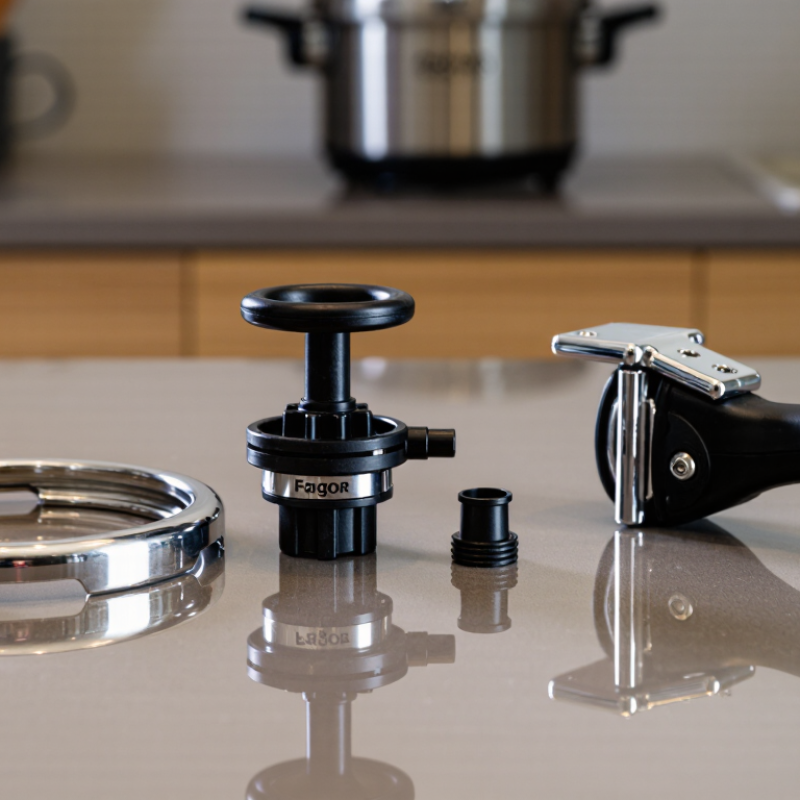
Why Choose Fagor Pressure Cooker Parts for Global Buyers?

What Are Fagor Pressure Cooker Parts?

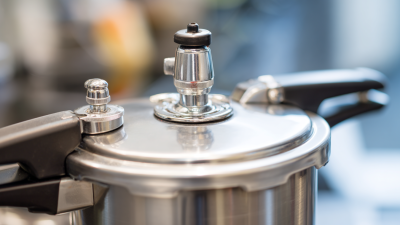
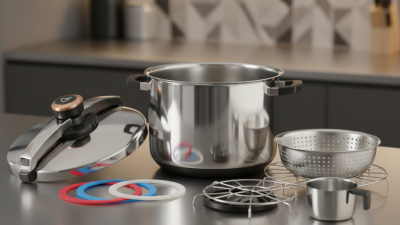
Pressure cooker parts are the replaceable components that control sealing, pressure, heat, and safe opening. Common examples include sealing rings, pressure regulators, safety valves, lid locks, handles, inner pots, and steam-release assemblies. Each part has a precise role. A sealing ring closes the lid tightly, while the regulator maintains the intended cooking pressure. A worn valve may release steam unevenly. A stretched gasket can leave moisture around the rim.

Small details matter.

Grand View Research’s 2024 pressure cooker market analysis identifies replacement demand as an important part of appliance ownership. Its broader findings also connect market growth with convenience, durability, and rising household cooking efficiency. These trends explain why international buyers examine part dimensions, materials, and compatibility before purchasing. Food-contact components should use suitable heat-resistant materials. Metal parts should resist corrosion after repeated washing.

Experienced distributors usually check inner diameter, outer diameter, valve position, lid design, and model generation. Product photographs help, but measurements remain more reliable. EN 12778 provides relevant safety guidance for domestic pressure cookers, although buyers should verify the standards required in their destination market. Not every “universal” part fits safely. That claim deserves careful review.

Manufacturing records, batch identification, inspection reports, and traceable packaging strengthen supplier credibility. Pressure testing and temperature-resistance checks can reveal defects that appearance misses. The World Bank’s Logistics Performance Index shows how international delivery reliability varies by market, making accurate specifications especially valuable. A low-cost part is not economical if it causes leakage, returns, or repeated downtime.

How Fagor Parts Support Cooker Compatibility

Compatibility matters more than appearance when replacing pressure cooker parts. A gasket may look identical, yet differ by only two millimetres. That gap can affect sealing, pressure control, and safe operation. Replacement parts should match the cooker’s model code, lid diameter, valve design, pressure rating, and material requirements. The U.S. Consumer Product Safety Commission repeatedly highlights pressure-release and locking systems as important safety features. Fit is not a cosmetic detail.

Fortune Business Insights estimated the global pressure cooker market at about USD 5.3 billion in 2023. Such growth increases demand for dependable replacement components across different regions. However, market figures vary between reports, so precise forecasts deserve caution. In practical servicing, technicians should compare the old gasket’s profile, valve stem length, and seating position. A verified match is better than a convenient guess. Some older cookers may also have limited documentation, which makes compatibility testing imperfect.

Tips: Check the model label before ordering. Measure the gasket’s inner and outer diameters. Confirm the valve type and pressure specification. Never force a part into place. If the lid closes differently, stop and reassess. One overlooked measurement can create a serious weakness.

Which Materials and Features Ensure Reliable Performance?

For global buyers, reliable pressure cooker parts begin with material discipline. The International Stainless Steel Forum reported about 58.4 million tonnes of stainless steel production in 2023. This scale supports stable sourcing, but grade still matters. Food-contact components should usually use corrosion-resistant 304 stainless steel. Salt-heavy cooking may justify 316 stainless steel. An aluminum core can spread heat beneath the steel surface. It reduces hot spots around the base.

Gaskets need equal attention. Food-grade silicone handles repeated heating better than many low-cost elastomers. Buyers should check temperature limits, compression recovery, and odor after washing. A gasket that feels soft may still seal poorly. The U.S. FDA Food Code 2022 requires food-contact surfaces to be smooth, corrosion-resistant, and cleanable. That guidance makes rough welds and deep scratches unacceptable. I would inspect the sealing rim under bright light, not trust polished photographs.

Safety features must match the cooker’s original design. A dependable replacement assembly should support lid locking, pressure indication, controlled steam release, and emergency overpressure protection. EN 12778 provides recognized safety requirements for domestic pressure cookers. Yet standards do not remove every risk. Small dimensional errors can weaken a seal. Buyers should request drawings, batch traceability, and fit tests. I have seen apparently identical parts fail because the valve stem was slightly longer. That detail is easy to overlook.

How Global Buyers Can Assess Quality and Safety

Why Choose Pressure Cooker Parts for Global Buyers?

For global buyers, quality begins with evidence, not attractive packaging. The 2023 EU Safety Gate report recorded 3,412 product alerts, showing why traceability matters across international supply chains. Ask suppliers for batch numbers, material declarations, inspection records, and testing dates. Parts should match the cooker’s model, pressure rating, and sealing design. A gasket that looks identical may still soften, shrink, or leak under heat.

Safety checks need practical detail. Examine silicone seals for uniform thickness, clean edges, and strong elasticity after compression. Check valves for smooth movement and clear pressure-release paths. Stainless steel components should resist corrosion and show consistent surface finishing. Relevant requirements may include EN 12778 for domestic pressure cookers, while documented quality systems can support supplier reliability. The ISO Survey 2022 reported more than 1.2 million ISO 9001 certificates worldwide, but certification alone does not prove every replacement part is safe.

A careful buyer should request independent test reports, not only factory claims. Ask whether samples were tested at temperature, pressure, and repeated-use conditions. Packaging also matters; crushed seals or dusty valves can fail before installation. One imperfect assumption is common: a lower price does not always mean poor quality, and a certificate does not guarantee perfect production. Compare failure records, warranty terms, inspection frequency, and response time. Keep sample parts for later review. Small details often reveal larger control problems.

How Global Buyers Can Assess Pressure Cooker Part Quality and Safety

Material composition is one practical screening point when evaluating replacement pressure cooker parts. The values below show typical alloying-element ranges for commonly specified stainless-steel grades. Buyers should also request traceability, dimensional inspection records, pressure-safety test results, and food-contact compliance documents before approval.

What Should Buyers Know About Sourcing and Replacement?

Global buyers should treat pressure cooker parts as safety-critical components, not ordinary kitchen accessories. Fortune Business Insights estimated the global pressure cooker market at about USD 5 billion in 2023, with continued growth expected through 2030. That expansion increases demand for dependable replacement seals, valves, handles, and pressure indicators.

Compatibility must be verified before purchasing. Check the cooker’s model code, lid diameter, gasket profile, valve design, and material specifications. A seal that looks correct may still leak around the rim. Ask suppliers for dimensional drawings, material declarations, batch records, and sample testing. ISO 9001 certification can support process reliability, but it does not prove that every part fits your equipment.

Small details matter.

For international sourcing, confirm packaging strength, moisture protection, labeling, and replacement instructions. The United Nations Global E-commerce Report highlights how cross-border trade depends on accurate product information and dependable fulfillment. Buyers should also request inspection photos and define acceptable tolerances before production. In practice, sourcing teams sometimes focus too heavily on unit price. That can be a costly mistake when a low-grade gasket hardens near heat. I would still recheck supplier documents, because certificates can be incomplete, outdated, or poorly matched to the actual component.

Why Choose Fagor Pressure Cooker Parts for Global Buyers? - What Should Buyers Know About Sourcing and Replacement?
Part Category Primary Function Common Materials Typical Replacement Trigger Buyer Verification Points Sourcing Priority Storage and Shipping Notes
Sealing Ring / Gasket Creates the pressure-tight seal between the lid and the cooking pot. Food-contact silicone or heat-resistant elastomer. Visible cracking, flattening, hardening, stretching, persistent steam leakage, or an odor that remains after cleaning. Confirm the cooker model, lid diameter, groove profile, cross-section, food-contact suitability, and temperature rating. Do not select by diameter alone. High Protect from ozone, direct sunlight, oils, and sharp edges. Keep sealed and clean during international transport.
Pressure Regulator / Weight Controls or indicates operating pressure by regulating steam release. Stainless steel, heat-resistant polymer, or a combination of both. Blocked venting, unstable pressure indication, damaged threads, corrosion, or failure to move as designed. Verify the intended pressure range, regulator design, mounting method, and compatibility with the lid vent assembly. High Pack separately from heavy metal parts. Prevent impact, contamination, and deformation of small openings.
Overpressure Safety Valve Provides a secondary pressure-relief path if normal pressure regulation is obstructed. Stainless steel, brass, silicone, or engineered heat-resistant components. Leakage, corrosion, blocked passage, damaged seal, or any sign that the valve does not move or reset correctly. Confirm the valve type, opening pressure specification, thread or mounting dimensions, and compatibility with the original safety system. High Use protective packaging and keep the part free from dust and metal filings. Safety-related parts require traceable inspection.
Lid Handle Allows the user to lift, close, and lock the lid safely. Heat-resistant polymer with stainless-steel screws or brackets. Cracks, loose fasteners, heat deformation, broken locking features, or excessive movement. Check screw spacing, handle geometry, locking mechanism, fastener size, and clearance from the pressure-release components. Medium Prevent crushing and heat exposure. Include all required screws, washers, or insulating components in the package.
Pot Handles and Side Grips Provide a secure grip for carrying and positioning the pressure cooker. Heat-resistant polymer, stainless steel, aluminum, or composite assemblies. Cracks, loose mounting, discoloration from heat, missing screws, or damaged insulating surfaces. Verify mounting-hole spacing, handle orientation, screw length, load-bearing design, and compatibility with the pot body. Medium Separate metal hardware from polymer parts to reduce scratching. Use cushioning for bulk shipments.
Vent Tube / Steam Vent Provides the passage through which steam reaches the pressure regulator. Stainless steel or other corrosion-resistant metal suitable for food contact. Blockage, dents, corrosion, damaged threads, or restricted steam flow after cleaning. Measure external and internal dimensions, thread specification, tube length, opening size, and lid mounting arrangement. High Keep openings capped or protected against dust. Avoid bending during packing and customs handling.
Locking Indicator or Lock Pin Shows or supports the locked condition required for pressure operation. Stainless steel, brass, silicone seal, and heat-resistant polymer. Sticking, leakage around the pin, failure to rise, inaccurate indication, or damaged sealing elements. Confirm pin length, diameter, spring arrangement, seal dimensions, lid thickness, and operating position. High Protect small springs, pins, and seals from loss. Group components in labeled bags with quantity checks.
Replacement Cooking Pot Holds food and liquid during pressure cooking. Stainless steel, aluminum, or coated aluminum, depending on the cooker design. Deep dents, severe corrosion, damaged base, coating failure, distortion, or loss of dimensional fit. Check internal diameter, height, capacity, base profile, rim shape, material, and compatibility with the lid and heat source. Routine Use edge protection and dividers. Confirm whether the part is suitable for gas, electric, ceramic, or induction cooking before purchase.
Maintenance Kit Combines commonly replaced seals, valves, washers, and small hardware for scheduled servicing. Silicone, stainless steel, brass, and heat-resistant polymer. Preventive maintenance, unavailable individual parts, or the need to reduce downtime for multiple units. Request a complete contents list, part drawings, batch identification, material declarations, and compatibility by cooker model. Routine Use moisture-resistant labels and sealed inner bags. Separate elastomers from solvents, lubricants, and sharp hardware.
Documentation and Traceability Supports correct installation, inspection, maintenance, and product identification. Technical drawings, installation instructions, material declarations, inspection records, and batch labels. Unclear compatibility, repeated installation errors, missing specifications, or customer-service disputes. Request dimensional drawings, revision numbers, inspection criteria, lot identification, and clear replacement instructions. High Provide digital copies with every shipment and place a durable part label inside the carton.
Buyer reminder: Pressure-cooker safety components should be replaced only with parts verified for the exact cooker design. Always follow the applicable user manual and local safety requirements before operation.